Prostate Health Educational Series

Prostate-health-after-50.jpg
Introduction
As men age, changes in urinary function become increasingly common. Many men over 50 begin to notice symptoms such as frequent urination, waking up multiple times during the night, or a weaker urine stream. While these changes can be frustrating and disruptive, they are often related to natural age-associated prostate enlargement rather than something more serious.
The prostate is a small gland with an important role in male reproductive health. However, as it grows over time, it can begin to affect urinary function and overall quality of life.
This guide provides a clear, research-based overview of prostate health after 50. We will explore what the prostate does, what benign prostatic hyperplasia (BPH) is, common symptoms to watch for, available medical treatments, and lifestyle strategies that may support urinary health.
If you are experiencing persistent or severe symptoms, consulting a qualified healthcare professional is always recommended.
Table of Contents
- What Is the Prostate and What Does It Do?
- What Is Benign Prostatic Hyperplasia (BPH)?
- Common Symptoms of an Enlarged Prostate
- Why Does Prostate Enlargement Happen?
- When Should You See a Doctor?
- Medical Treatment Options
- Lifestyle & Nutritional Support for Prostate Health
- Do Prostate Supplements Really Work?
- Final Thoughts
- Frequently Asked Questions



What Is the Prostate and What Does It Do?
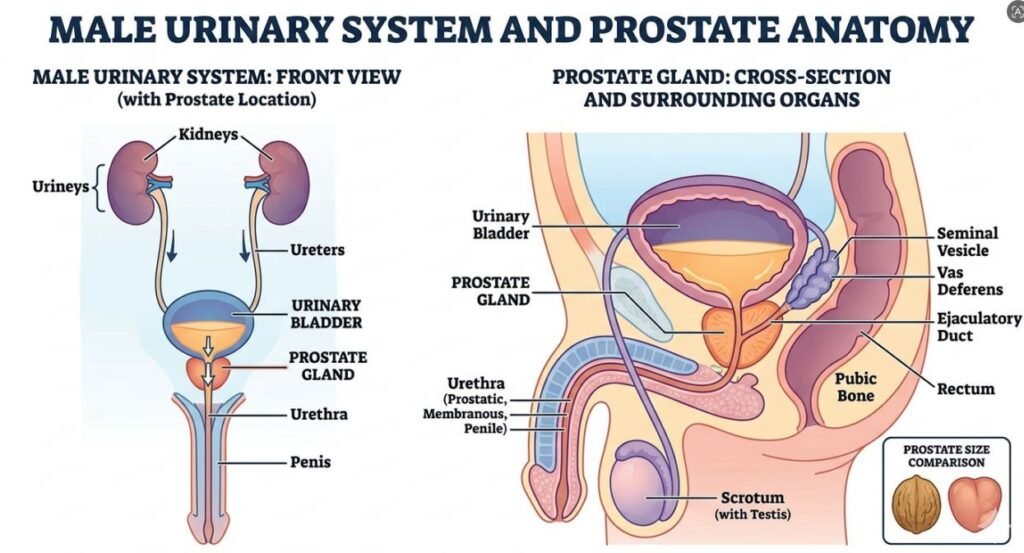
The prostate is a small, walnut-sized gland that is part of the male reproductive system. It is located just below the bladder and surrounds the urethra — the tube responsible for carrying urine out of the body.
Although relatively small in younger men, the prostate plays an important role in reproductive health. Its primary function is to produce a fluid that nourishes and transports sperm. This fluid becomes part of semen.
Because of its position around the urethra, the prostate also has a direct impact on urinary function. When the gland enlarges — which commonly happens with age — it can press against the urethra and partially restrict urine flow.
This is why many prostate-related issues are first noticed through urinary changes rather than pain or visible symptoms.
In most cases, prostate growth after midlife is gradual and non-cancerous. However, understanding how the gland functions helps explain why certain symptoms appear and why early awareness is important.
What Is Benign Prostatic Hyperplasia (BPH)?
Benign Prostatic Hyperplasia (BPH) is a medical term used to describe non-cancerous enlargement of the prostate gland. It is one of the most common age-related conditions affecting men over 50.
The word “benign” means that the condition is not cancerous. BPH does not cause prostate cancer, nor does it increase the risk of developing cancer directly. However, its symptoms can significantly affect daily comfort and sleep quality.
As men age, hormonal changes — particularly involving testosterone and its byproduct dihydrotestosterone (DHT) — are believed to play a role in prostate growth. Over time, the enlarging gland can begin to compress the urethra, leading to urinary difficulties.
BPH develops gradually. Some men experience mild symptoms that remain stable for years, while others may notice progressive changes in urinary function.
Because symptoms can overlap with other prostate conditions, proper medical evaluation is important if urinary issues become persistent or severe.
Common Symptoms of an Enlarged Prostate
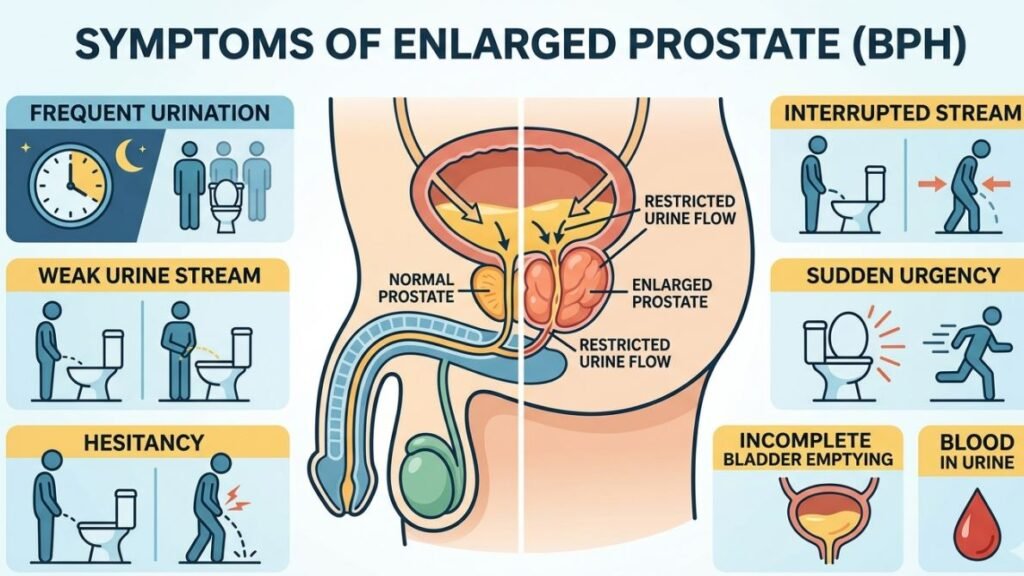
An enlarged prostate often develops gradually, and early symptoms may be subtle. Many men initially dismiss these changes as a normal part of aging. However, recognizing patterns early can help prevent worsening discomfort.
Below are some of the most commonly reported symptoms associated with benign prostatic hyperplasia (BPH):
Frequent Urination
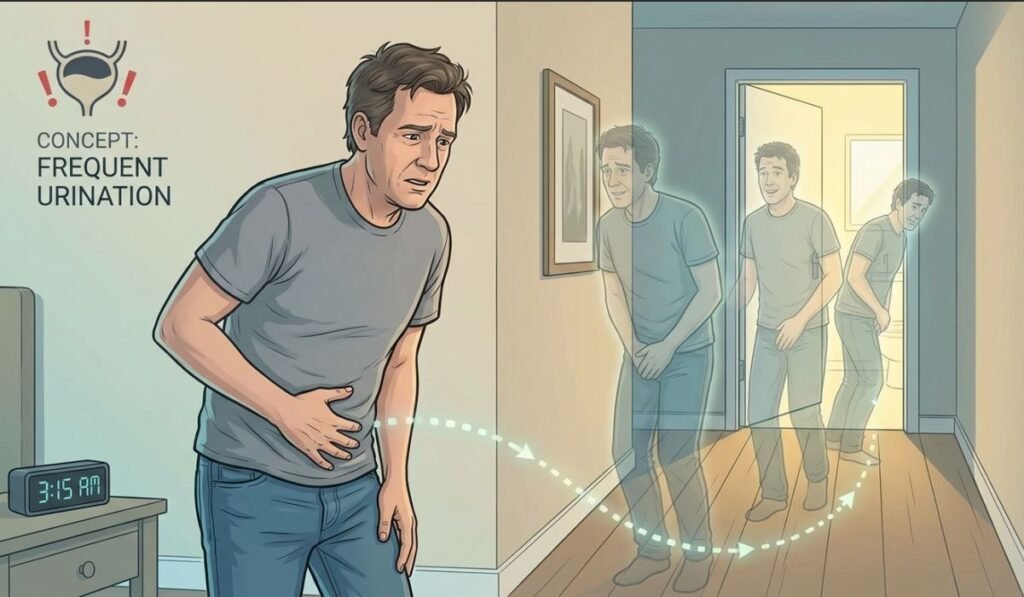
One of the earliest signs is the need to urinate more often than usual. This can happen during the day or night and may occur even when the bladder does not feel completely full.
As the prostate enlarges, pressure on the urethra can irritate the bladder, making it signal the need to empty more frequently.
Learn more in our detailed article: What Causes Frequent Urination in Men Over 50?
Waking Up at Night to Urinate (Nocturia)
Many men with BPH report waking up multiple times during the night to urinate. This condition, known as nocturia, can significantly disrupt sleep quality and overall energy levels.
Interrupted sleep may lead to fatigue, reduced concentration, and decreased daytime productivity.
See our full guide: Why Do Men Wake Up at Night to Urinate?
Weak Urine Stream
A noticeable decrease in urine flow strength is another common symptom. Instead of a steady stream, urine flow may feel slower or less forceful than before.
This occurs because the enlarged prostate narrows the urethral passage.
Learn more here: Weak Urine Stream: Is It a Sign of Prostate Enlargement?
Difficulty Starting Urination
Some men experience hesitation before urine begins to flow. There may be a delay between the urge to urinate and the actual start of urination.
This can be frustrating and sometimes anxiety-inducing.
More details in our article: Difficulty Starting Urination in Older Men
Feeling of Incomplete Bladder Emptying
Even after urinating, some men feel as though the bladder has not emptied completely. This sensation may lead to repeated attempts to urinate shortly afterward.
Read more here: Feeling of Incomplete Bladder Emptying Explained
Symptoms vary in severity from person to person. While mild urinary changes are common with age, persistent or worsening symptoms should be discussed with a healthcare professional to rule out other potential causes
Why Does Prostate Enlargement Happen?
Prostate enlargement is primarily associated with aging. While the exact cause is not completely understood, researchers believe hormonal changes play a central role.
Hormonal Changes
As men grow older, levels of testosterone gradually decline. At the same time, the balance between testosterone and estrogen shifts. This hormonal change may contribute to continued prostate growth.
Another key factor is dihydrotestosterone (DHT), a byproduct of testosterone. DHT is known to influence prostate cell growth. Even as overall testosterone levels decrease with age, DHT can remain active within prostate tissue, potentially stimulating enlargement over time.
Inflammation
In addition to hormonal factors, chronic low-grade inflammation has also been studied as a possible contributor. Inflammation within prostate tissue may promote changes in cell structure and function.
Lifestyle Factors
Lifestyle factors may also influence prostate health, including:
• Excess body weight
• Sedentary lifestyle
• Poor dietary patterns
• Metabolic health issues
It is important to note that prostate enlargement is extremely common. By age 60, a significant percentage of men show some degree of prostate growth, even if symptoms are mild.
Understanding these mechanisms helps explain why BPH becomes more prevalent with age and why management strategies often focus on both hormonal and lifestyle considerations.
When Should You See a Doctor?
While mild urinary changes can be common with age, certain symptoms require prompt medical attention.
It is important not to self-diagnose persistent urinary issues, as some symptoms of benign prostatic hyperplasia (BPH) may overlap with other prostate or bladder conditions.
- Blood in the urine
- Painful urination
- Sudden inability to urinate
- Severe lower abdominal pain
- Fever combined with urinary symptoms
- Rapid worsening of urinary difficulties
A healthcare professional may perform a physical examination, review your medical history, and recommend diagnostic tests such as a PSA blood test or imaging if necessary.
Early evaluation helps rule out more serious conditions, including infections or prostate cancer, and ensures appropriate treatment if required.
Even if symptoms are mild, discussing urinary changes during routine check-ups can help monitor prostate health over time.
Medical Treatment Options for BPH
Treatment for benign prostatic hyperplasia (BPH) depends on symptom severity, overall health, and how much urinary function is affected.
For men with mild symptoms, doctors may recommend a “watchful waiting” approach, which involves monitoring changes over time without immediate medication.
When symptoms become more disruptive, medical treatment options may include:
Alpha-Blockers
Alpha-blockers are commonly prescribed medications that help relax the muscles around the prostate and bladder neck. This relaxation can improve urine flow and reduce difficulty starting urination.
These medications often work relatively quickly but do not reduce prostate size.
5-Alpha-Reductase Inhibitors
This class of medication works by reducing the conversion of testosterone into dihydrotestosterone (DHT), a hormone associated with prostate growth.
Over time, these medications may help shrink the prostate and improve urinary symptoms. However, results may take several months.
Combination Therapy
In some cases, doctors may prescribe both types of medication together to improve symptom control.
Minimally Invasive Procedures
For moderate to severe symptoms that do not respond well to medication, minimally invasive treatments may be considered. These procedures aim to reduce prostate tissue pressing against the urethra.
Surgical Options
In more severe cases, surgery may be recommended to remove or reduce excess prostate tissue. Surgical intervention is typically reserved for significant obstruction or complications.
The appropriate treatment plan should always be determined by a qualified healthcare professional based on individual evaluation.
Lifestyle & Nutritional Support for Prostate Health


While medical treatment may be necessary for some men, lifestyle and nutritional strategies are often part of a comprehensive approach to prostate health.
Although these measures may not reverse prostate enlargement, they can support overall urinary function and general well-being.
Below are commonly discussed lifestyle considerations:
Diet and Nutrition
A balanced diet rich in vegetables, fruits, healthy fats, and lean proteins may support long-term metabolic and hormonal health.
Some observational research suggests that diets high in processed foods and saturated fats may be associated with increased inflammation, which could influence prostate health over time.
In contrast, dietary patterns that emphasize plant-based nutrients and antioxidants may offer supportive benefits.
Physical Activity
Regular physical activity has been associated with improved circulation, hormone balance, and weight management.
Moderate exercise, such as walking, resistance training, or cycling, may contribute to overall urinary and metabolic health.
Weight Management
Excess body weight has been linked to metabolic changes that may influence hormone regulation.
Maintaining a healthy weight may help reduce pressure on the bladder and support general urological function.
Key Nutrients & Plant Compounds
Certain nutrients and plant-derived compounds have been studied for their potential role in supporting urinary comfort and prostate health.
These include:
• Beta-sitosterol – A plant sterol studied for its potential to support urinary flow and reduce certain symptoms associated with BPH.
• Saw palmetto – A botanical extract commonly used in men’s health supplements. Research results are mixed, but it remains widely used.
• Zinc – An essential mineral involved in immune and cellular function, including within prostate tissue.
It is important to note that research findings vary, and responses to nutritional strategies may differ from person to person.
Lifestyle adjustments are often most effective when combined with appropriate medical guidance.
Do Prostate Supplements Really Work?
Over-the-counter prostate supplements are widely available and often marketed toward men experiencing urinary discomfort associated with aging.
These products typically combine plant extracts, vitamins, and minerals formulated to support urinary flow and prostate function.
Some supplements focus on single-ingredient formulations, while others use multi-ingredient blends that include compounds such as beta-sitosterol, saw palmetto, zinc, and other plant-derived extracts.
Examples of commercially available prostate supplements include products such as:
- Prostadine
- Super Beta Prostate
Formulations, ingredient quality, and clinical support can vary significantly between products.
While some men report improvement in urinary comfort when using certain supplements, scientific evidence remains mixed. Supplements are not intended to diagnose, treat, cure, or prevent disease.
Anyone considering supplementation should review ingredient lists carefully and consult a healthcare professional, particularly if taking prescription medications.
Final Thoughts
Prostate enlargement is a common and often manageable part of aging for many men. While symptoms such as frequent urination or weak urine flow can affect quality of life, a range of medical and lifestyle approaches are available.
Understanding how the prostate functions, recognizing early symptoms, and seeking appropriate evaluation when necessary are important steps in maintaining long-term urinary health.
Treatment options may include medical therapy, minimally invasive procedures, lifestyle adjustments, and, in some cases, carefully selected nutritional supplements.
Because every individual’s health profile is different, informed decision-making — ideally guided by a qualified healthcare professional — remains essential.
Staying informed empowers men to approach prostate health with clarity rather than concern.
Frequently Asked Questions
1-What is the most common prostate problem after age 50?
Benign prostatic hyperplasia (BPH), or prostate enlargement, is one of the most common prostate conditions affecting men over the age of 50. It occurs when the prostate gland gradually increases in size and may begin to affect urinary flow.
2-Is waking up at night to urinate always related to prostate problems?
Not always. Nighttime urination, known as nocturia, can have several causes including fluid intake, bladder conditions, sleep disorders, or prostate enlargement. Persistent symptoms should be evaluated by a healthcare professional.
3-Can lifestyle changes support prostate health?
Healthy lifestyle habits such as maintaining a balanced diet, exercising regularly, and managing body weight may help support overall urinary and metabolic health.
4-Do prostate supplements cure prostate enlargement?
Dietary supplements are not intended to cure prostate enlargement. Some ingredients have been studied for their potential to support urinary comfort, but results vary between individuals and should not replace medical evaluation.
Medical Sources
The information presented in this article is based on publicly available educational materials from recognized medical organizations and health institutions.
- Mayo Clinic
- Cleveland Clinic
- National Institutes of Health (NIH)
- World Health Organization (WHO)
- Urology Care Foundation
These institutions provide research-based medical information used for educational and awareness purposes.
About the Author
Prostate Care Insights Editorial Team
The Prostate Care Insights Editorial Team creates educational content focused on prostate health, urinary health, and men’s wellness.
Our content is developed using information from recognized medical organizations, peer-reviewed research, and publicly available health resources. We aim to translate complex health information into clear, practical, and easy-to-understand articles for our readers.
Our goal is to help men better understand common prostate and urinary health concerns and make informed decisions when discussing their health with a qualified healthcare professional.
Medical Disclaimer: The information provided on Prostate Care Insights is for educational purposes only and is not intended to replace professional medical advice, diagnosis, or treatment.